
 Continue with Google
Blogs
How 3D Printing Is Transforming Custom Products and Small Businesses
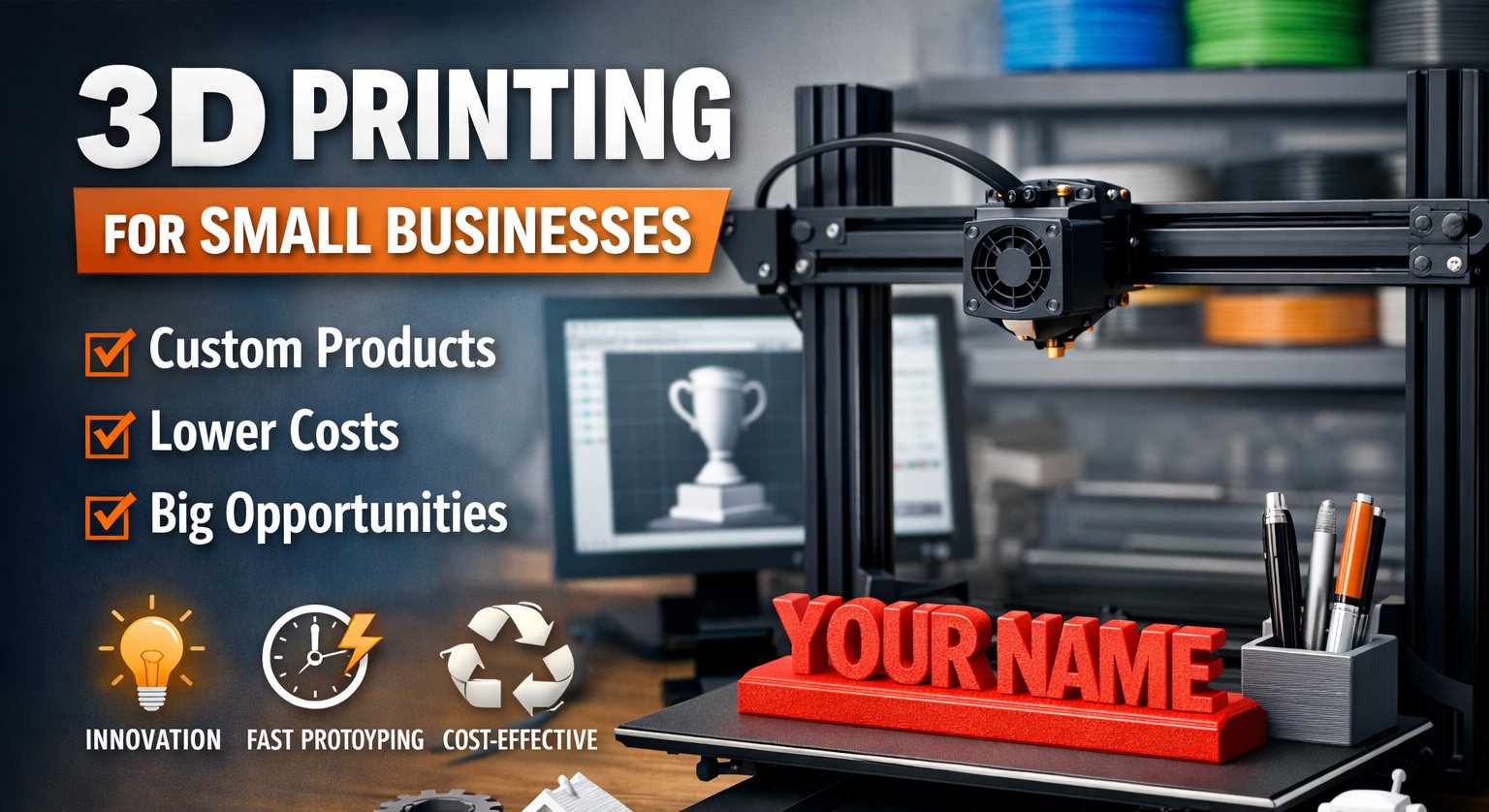
3D printing, also known as additive manufacturing, has rapidly evolved from a prototyping tool into a powerful production technology. Today, it is helping small businesses, creators, and startups design and manufacture customized products faster, cheaper, and with greater flexibility than ever before.
What Is 3D Printing?
3D printing is the process of creating three-dimensional objects by layering material based on a digital design. Unlike traditional manufacturing methods that cut or mold materials, 3D printing builds products layer by layer, reducing waste and allowing for complex designs.
Common materials used in 3D printing include PLA, ABS, PETG, resin, and even metal composites—each suitable for different use cases such as décor items, prototypes, mechanical parts, and personalized gifts.
Why 3D Printing Is a Game Changer for Customization
One of the biggest advantages of 3D printing is mass customization. Businesses can easily personalize products such as name stands, trophies, phone holders, keychains, and décor items without increasing production costs.
For example, creating a customized name desk stand with a built-in pen holder is as simple as editing a digital file and printing it—no molds or special tooling required.
Benefits of 3D Printing for Small Businesses
1. Low Initial Investment
Traditional manufacturing requires expensive machinery and bulk production. 3D printing allows businesses to start with minimal investment and scale gradually.
2. Faster Product Development
Design changes can be implemented instantly. This makes 3D printing ideal for rapid prototyping and testing before final production.
3. Reduced Material Waste
Since products are built layer by layer, material usage is optimized, making 3D printing an eco-friendly manufacturing option.
4. On-Demand Production
Products can be printed only when orders are received, eliminating the need for large inventories and storage costs.
Popular Applications of 3D Printing
- Personalized gifts and name plates
- Educational models and tools
- Home décor and organizers
- Prototypes for startups
- Custom spare parts and accessories
With growing consumer demand for unique and personalized products, 3D printing opens new opportunities across multiple industries.
The Future of 3D Printing
As printers become more affordable and materials more advanced, 3D printing will continue to reshape manufacturing. From customized consumer products to industrial applications, businesses that adopt this technology early will have a significant competitive advantage.
Conclusion
3D printing is no longer just a futuristic concept—it’s a practical and profitable solution for modern businesses. Whether you’re a startup, a creative entrepreneur, or an established company, integrating 3D printing into your workflow can unlock innovation, efficiency, and endless customization possibilities.